Curist delivers medicines to your door at a fraction of the price of traditional brands. We hope everyone stays safe and healthy during this time.
Introduction: Fungal infections in the groin area, often referred to as jock itch, are a common condition that can cause itching, redness, burning, and discomfort. These infections thrive in warm, moist environments and can easily worsen without proper treatment. Fortunately, antifungal creams are an effective first-line option for relieving symptoms and clearing the infection. In this article, we will explore the best antifungal creams for the groin area and what to consider when choosing the right treatment.
Is My Groin Rash Fungal or Bacterial?
It can be difficult to tell at home, but the patterns of symptoms and appearance often give helpful clues. A fungal groin rash (like jock itch) usually causes a red or reddish-brown, itchy rash with a sharply defined, often scaly border. It commonly appears in the folds of the groin and may spread outward in a ring-like pattern. Itching is typically the dominant symptom, and it often worsens with heat, sweating, or tight clothing. A bacterial groin infection, on the other hand, is more likely to look more raw, tender, or painful, sometimes with swelling, warmth, or even pus or drainage. The skin may appear more uniformly red rather than ring-shaped, and discomfort or pain may be more noticeable than itching. Some bacterial infections can also develop after skin breaks, shaving irritation, or an existing rash that becomes secondarily infected.
Because the treatments are different (antifungal creams for fungal infections and antibiotics for bacterial ones), persistent, worsening, or unclear rashes should be evaluated by a healthcare professional for proper diagnosis and treatment.
What Causes Fungal Infections in the Groin Area?
Fungal infections in the groin area, commonly called jock itch, are caused by an overgrowth of fungi that naturally live on the skin. These fungi thrive in warm, moist environments, which makes the groin especially vulnerable. Several factors can increase the risk of developing a fungal groin infection. Excess sweating, tight or non-breathable clothing, and prolonged moisture from exercise or humidity create ideal conditions for fungal growth. Poor hygiene or not drying the area thoroughly after bathing can also contribute. In addition, sharing towels or clothes, having athlete’s foot (which can spread to the groin), or a weakened immune system can make infections more likely.
Overall, fungal groin infections are not uncommon and are mainly driven by moisture, heat, and friction in the area.
What Causes Jock Itch to Develop in the Groin Area?
Jock itch develops in the groin area when fungi that normally live on the skin grow excessively in a warm, moist environment. The groin is especially prone to this because it naturally traps heat and moisture. Common triggers include sweating from exercise, hot or humid weather, and wearing tight or non-breathable clothing that doesn’t allow airflow. Not drying the area well after bathing or sweating can also encourage fungal growth. In addition, friction from clothing or skin-on-skin contact can irritate the skin and make it easier for infection to develop. People with athlete’s foot may also spread the infection to the groin by touching or using the same towels or clothing. Other risk factors include obesity, which increases skin folds where moisture can collect, and a weakened immune system. Overall, jock itch is mainly caused by a combination of moisture, heat, and friction that allows fungal organisms to overgrow in the groin area.
Can You Use Terbinafine in the Groin Area?
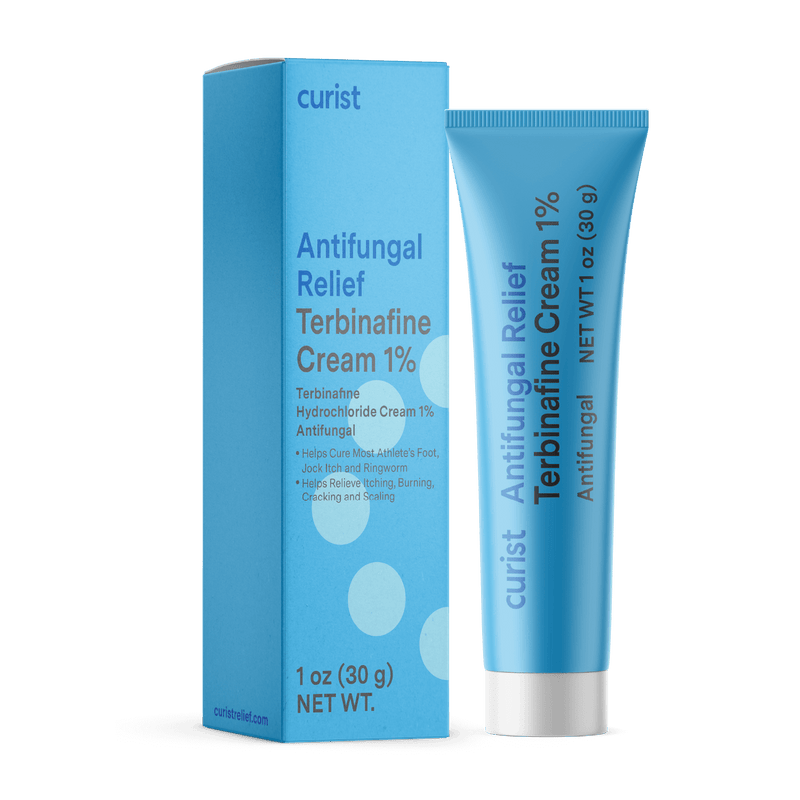
Yes, terbinafine can be used in the groin area. It is actually one of the most effective over-the-counter treatments for fungal infections like jock itch (tinea cruris) due to its fungicidal properties and rapid action. It works by blocking an enzyme the fungus needs to build its cell membrane, which stops fungal growth and ultimately kills the infection at its source. Curist Antifungal Relief is an over-the-counter treatment for jock itch with terbinafine 1%.
What Cream is the Best for Fungal Infections in the Groin Area?
The most effective over-the-counter cream for fungal infections in the groin area (jock itch) is terbinafine (also known by its brand names Lamisil and Curist Antifungal Relief). Terbinafine works by blocking a key enzyme the fungus needs to build its cell membrane, which leads to fungal cell death rather than just slowing its growth. Because of this mechanism, it typically works faster and more effectively than older antifungals, with many cases improving in about 1–2 weeks of consistent use. Other options like clotrimazole or miconazole are also effective, but they generally take longer because they inhibit fungal growth rather than directly killing the fungus. Overall, terbinafine is considered one of the most effective topical treatments for most uncomplicated jock itch cases.
Which is the Most Effective Antifungal Cream for Jock Itch: Lamisil or Lotrimin or Monistat?
The most effective option for jock itch among these is terbinafine, which is known by its brand names Lamisil and Curist Antifungal Relief. Terbinafine is an antifungal that kills the fungus directly by blocking an enzyme needed to build its cell membrane and has consistently shown higher cure rates and faster symptom relief compared with azole antifungals. In comparative studies, terbinafine clears infections faster within 1–2 weeks, while azoles typically require 2–4 weeks of treatment.
Lotrimin (clotrimazole) and Monistat (miconazole) are both azole antifungals. They are effective, but they work more slowly because they generally stop fungal growth rather than rapidly killing the organism. They are still good alternatives if terbinafine is not available or not tolerated, but they require longer and more consistent use to achieve similar results.
What Are Common Mistakes When Using Antifungal Cream for Groin Area?
Common mistakes when using antifungal cream for the groin area can delay healing or cause the infection to come back. One of the most frequent issues is not using the cream long enough, even after the rash starts to improve. This can allow the fungus to survive and the infection to recur. Another common mistake is applying too little or missing doses, which reduces effectiveness and prevents the medication from fully clearing the infection.
People also often apply the cream only to the visible rash instead of extending it slightly beyond the affected area, which is important because the fungus can spread beyond what is seen. Stopping treatment too early, especially with creams like terbinafine or clotrimazole, is another key reason infections persist. In addition, keeping the area moist, such as not drying properly after bathing or continuing to wear tight, non-breathable clothing can worsen the condition despite treatment.